Edmtrain Concerts & Raves
- 4.9
- Rating
- 100.00K
- Installs
- Free
- Price

 Analysis by App-foxy
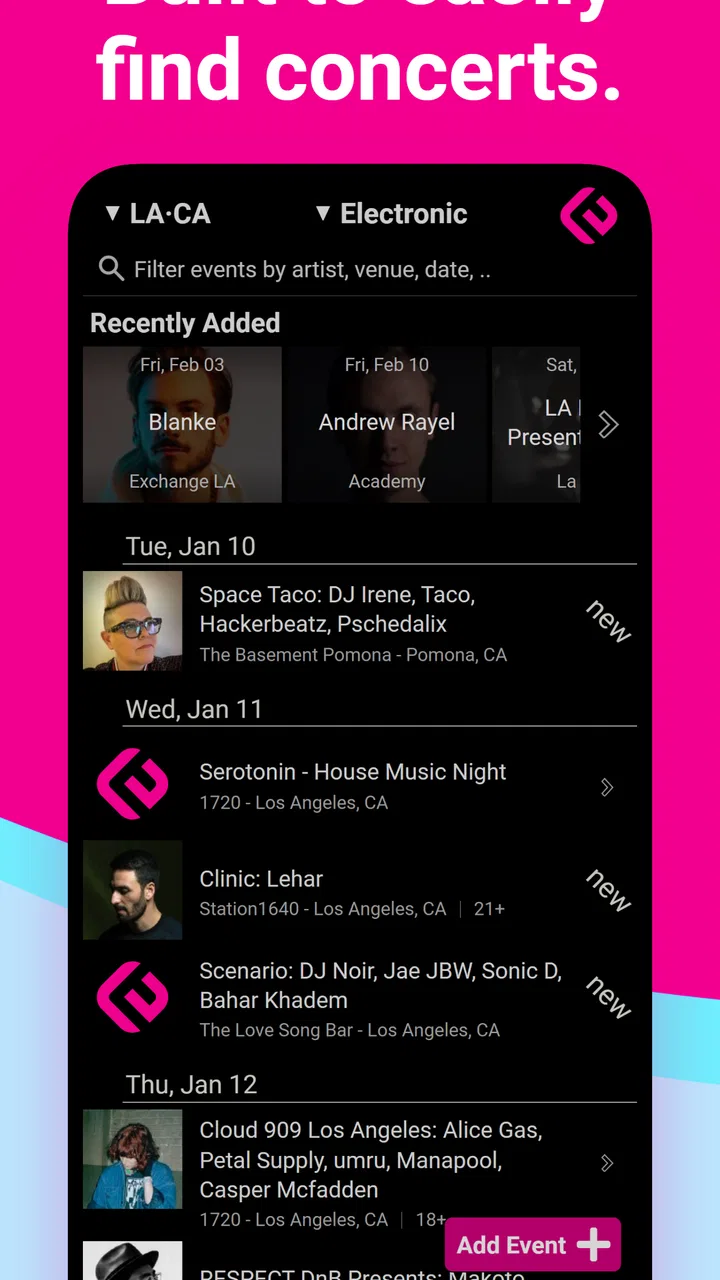
I installed Edmtrain Concerts & Raves because finding electronic music events can become surprisingly messy. Artist pages, venue calendars, ticket platforms, social posts, and local event groups often show different pieces of the same nightlife picture. This app takes a more focused approach: it is an events app built around locating EDM shows, checking who is playing, and discovering something worth seeing nearby. After using it as a planning tool rather than simply browsing it once, I found it most useful when I already knew I wanted to go out but had not decided exactly where or to whom.
The first impression is refreshingly direct. The app is not trying to be a general social network, a streaming service, or a broad entertainment guide. Its purpose is tied to electronic dance music and live events. That narrow focus matters because the usual alternatives often bury club nights between concerts, theater, sports, and unrelated local listings. With Edmtrain Concerts & Raves, the search begins from the kind of night I want to have: a certain artist, a nearby city, a venue, or simply an appealing event on a free evening.
How I use it to turn a free night into a real plan
My baseline workflow is simple. I open the app, choose the location that makes sense for my plans, and scan the event listings instead of searching the wider internet from scratch. I look first at the artist names and dates, then at the venue and the overall shape of the night. That order helps me avoid a common mistake: getting excited about a familiar performer before noticing that the event is inconveniently far away or scheduled for a night when I cannot attend.
You May Also Like

 Blood Strike: 2.5 Anniversary
Blood Strike’s Loadouts Turn Every Drop Into a Tactical Gamble
A close look at Blood Strike’s custom loadouts: how fast access to signature weapons reshapes its battle royale rhythm, rewards preparation, and narrows the gap between fights.

 Pandora - Music & Podcasts
Pandora’s Music Is Easy to Start, but Harder to Recover
Pandora’s strength is its low-effort path from a seed to a station. Its weak spot is how much confidence it asks you to place in connection, setup, and quiet recovery.

 8 Ball Pool
 Is Built on Rivalries, Rematches, and Routine
A close look at the rivalries, rematches, shared routines, and unanswered safety questions that turn a quick pool match into a persistent mobile community.

 Samsung Music
’s Quiet Strength Is Playing What You Already Own
Its reach comes less from spectacle than from dependable access to a personal library. That simplicity is both the app’s strongest retention engine and its ceiling.

 AccuWeather: Weather Radar
AccuWeather Review: A Quick, Clear Forecast for Everyday Decisions
For everyday plans, the best forecast is the one you can understand quickly. AccuWeather makes rain timing, radar, and local conditions easy to act on, with a few trade-offs.

 Hill Climb Racing
Why Hill Climb Racing Still Turns Crashes Into One More Run
A tiny car, a bumpy hill and one more upgrade: Hill Climb Racing keeps resurfacing because its simple chaos makes every near-miss feel personal.
More From Our News Desk



The app works particularly well for two opposite situations. If I am looking for a specific act, it gives me a practical place to begin checking for a nearby appearance. If I have no artist in mind, browsing the local listings becomes a discovery tool. I can compare several events in one sitting and decide whether I want a large headline show, a club-focused night, or something from an artist I have not followed closely yet.
A realistic example is a Friday afternoon when a friend asks what is happening that evening. Instead of opening several venue websites and then checking each performer separately, I use the app to review the local options first. I note the events that fit the date, check the venue details, and then move to the official ticket source or venue page before committing money or travel time. That last step is important: the app is excellent for discovery and orientation, while the final purchase decision should still be based on the event’s current official information.
One habit makes the browsing experience more useful: I do not treat the first attractive listing as the answer. I compare the event with the rest of the local calendar. Sometimes the better choice is not the biggest name but a less obvious date that suits my schedule, has a more appealing venue, or gives me a chance to hear a style I have been overlooking. The app encourages that kind of comparison because the listings put discovery close to the center of the experience.
For someone new to EDM, this can be less intimidating than trying to understand a scene through scattered recommendations. A new listener can start with a familiar artist, inspect related event options, and gradually recognize venues and performers. For an experienced fan, the value is different: it reduces the amount of repetitive searching needed to keep track of live opportunities across several cities or local areas.
What I check before trusting an event listing
I treat every listing as a starting point for planning, not as a replacement for the event organizer. Before buying a ticket, I verify the date, venue, artist lineup, and any practical details that could affect the night. Event information can change in the real world, and a focused discovery app cannot remove that uncertainty. This is not a criticism unique to this app; it is simply the right habit for concert planning.
I also check whether the location shown is genuinely convenient. “Near me” is useful only when the selected area reflects where I will actually be that day. If I am traveling, staying with friends, or planning a night across a city boundary, I make a deliberate location choice rather than assuming the default will cover the right area. This is one of the most important practical habits because an otherwise perfect event is not helpful if it belongs to the wrong part of the region.
Another useful check is the venue. The same artist can feel completely different in a large room, a smaller club, or an outdoor setting. Venue information helps me judge the kind of experience I am likely to get, but I still avoid assuming that the listing alone tells me everything about entry rules, set times, or access. Those details are the sort of information I confirm through the official event source.
Settings and choices worth checking early
The most valuable “settings” here are the choices that shape what I browse: location, date, and the way I narrow the event list. I recommend spending a minute establishing these before scrolling deeply. Otherwise, it is easy to mistake a long list for a complete picture when the real issue is that the search area or time window does not match the plan.
I use a broad location when I am discovering possibilities and a tighter one when I am ready to make a decision. The broad pass is useful for seeing whether a short trip opens up better options. The tighter pass keeps the final shortlist realistic. This two-stage approach is more effective than leaving the search broad all the time, because it separates inspiration from logistics.
Date awareness is equally important. If I am planning several weeks ahead, I scan the calendar for patterns rather than focusing on one listing. If I am deciding at the last minute, I concentrate on the immediate dates and then verify details elsewhere. That change in browsing behavior prevents the app from becoming a passive stream of event names; it turns it into a planning instrument.
I also recommend keeping personal preferences flexible at first. Searching only for the artists I already know is convenient, but it limits the discovery side of the app. I usually begin with familiar names only when I have a specific target. Otherwise, I look at the full local selection and use artist, venue, and date together to decide what deserves a closer look.
The app is free, which makes this exploratory workflow easy to justify. I can browse before I know whether I will attend anything, rather than feeling that I need to commit immediately. The content rating is Teen, so it is positioned for a younger audience as well as adults, although anyone planning a real night out should still consider the venue’s own age rules and entry requirements.
Faster patterns for regular event hunters
Once I use the app repeatedly, I stop treating each session as a fresh search. I keep a short mental list of the artists, venues, and nearby areas that matter most to me. Then I scan in that order: first the date, then the local event field, then the names that catch my attention. This reduces aimless scrolling without turning the experience into a rigid checklist.
A second pattern is to separate discovery from confirmation. During the first pass, I save nothing mentally except promising possibilities. During the second pass, I inspect the strongest candidates and confirm their practical details through the relevant official source. Mixing those two tasks often makes browsing slower because every interesting name triggers a full research session.
For group planning, I use the app before asking friends to vote. I create a shortlist based on date, location, and artist, then share the options in conversation. This works better than sending a single impulsive event because friends can compare realistic alternatives. It also exposes trade-offs early: one person may prefer the artist, another the venue, and someone else the travel distance.
For travel, the app is useful as an early research layer. I can check whether a destination has enough EDM activity to justify extending a trip or whether a particular weekend offers suitable choices. I would not use it alone to build a complete travel itinerary, because transport, accommodation, ticket conditions, and venue policies belong to separate planning steps. The strength is seeing the live-music possibilities before investing time in those details.
There is also a good habit for avoiding stale assumptions. I revisit an event close to the date instead of relying on what I saw during the first browse. I then confirm the official information before leaving. This is especially sensible when the event is important, involves travel, or depends on a particular performer appearing as expected.
Where the app is strong compared with general alternatives
Compared with a general ticket marketplace, Edmtrain Concerts & Raves feels more useful for discovery. Ticket platforms are often better at completing a purchase, showing inventory, or handling transaction details, but they may require more deliberate searching and can make the scene feel fragmented. This app starts closer to the question I actually ask: what EDM events are happening around me?
Compared with social media, it is less dependent on an algorithmic feed. Social posts can be excellent for announcements and atmosphere, but they are easy to miss and difficult to compare systematically. Here, the event-oriented format gives me a more practical overview. I can browse with a purpose instead of waiting for a promoter or artist post to appear in the right feed.
Compared with a venue’s own calendar, the app offers a wider starting point. A venue calendar is the best place to confirm that venue’s current details, but it naturally shows only one location’s schedule. Edmtrain Concerts & Raves is more helpful when I am choosing between venues or trying to discover an event outside my usual routine.
The trade-off is that a specialized discovery tool is not automatically the best final destination for every task. If I already know the exact venue and event, the venue’s official page may be faster. If I am ready to buy, a recognized ticket provider may provide the more complete transaction experience. I see this app as the layer that helps me find and compare possibilities before those final steps.
Limits that experienced users should understand
The narrow focus is both the app’s main advantage and its clearest limitation. It is a strong fit for EDM shows, but it will not replace a broad local events app if my interests include many unrelated genres or activities. Someone who wants one calendar for indie concerts, comedy, sports, festivals, and nightlife may prefer a general service and use this app only when electronic music becomes the priority.
Discovery can also create more options than a casual user expects. A long list of events is helpful, but it does not decide which night suits my budget, travel tolerance, preferred sound, or social group. I still have to make those judgments. The app reduces search friction; it does not remove the personal planning work that follows.
Another limitation is the boundary between event discovery and event verification. I do not assume that a listing contains every detail I need for entry, timing, ticketing, or last-minute changes. The practical solution is not to abandon the app but to use it in the right sequence: discover here, inspect the event carefully, and confirm through the official source before spending money or setting out.
New users may also need a little patience while they learn which locations and venues matter to them. At first, the app can feel like a list of names. After several browsing sessions, those names become useful context. I begin to recognize which venues match my preferred atmosphere and which artists are worth investigating. That learning curve rewards regular use more than one-time browsing.
The developer is EDM Train LLC, and the app has been available since January 25, 2013. Its longevity makes sense to me: the basic problem it addresses remains practical, especially for people who follow touring artists and local nightlife rather than only major mainstream concerts. The current audience is substantial, with over one hundred thousand installs, and the average rating is 4.9 from around four thousand ratings. I regard those figures as encouraging, while still judging the app by whether its workflow matches my own needs.
Who should use it, and who should skip it
I would recommend it to anyone who regularly looks for electronic music events, especially users who move between venues, discover artists through live lineups, or want a faster alternative to checking many separate calendars. It is also a good companion for friends planning a night together, because the event-first browsing makes it easier to create a shortlist before discussing tickets and travel.
It is particularly suitable for curious listeners who do not yet know the local scene. They can use familiar artists as an entry point, then browse beyond those names and learn which venues and performers appear in the same area. That discovery path is more valuable than simply searching for one concert and closing the app.
I would skip it as a primary tool if I rarely attend EDM events or if I need a complete all-purpose calendar. I would also look elsewhere first when I already know the exact event and only need ticket availability or official entry information. In that situation, the specialized discovery layer may add an unnecessary step.
My verdict after building a repeatable routine
The best way to use Edmtrain Concerts & Raves is as an EDM discovery and comparison tool, not as the entire concert-planning process. Its focused event listings make it easier for me to move from “I want to hear something live” to a realistic shortlist of artists, venues, and dates. The free price removes a barrier to casual browsing, and the Teen rating makes its intended audience broad enough for younger users while still leaving venue-specific rules to check.
My favorite workflow is deliberately repeatable: set the right location, scan the relevant dates, browse familiar and unfamiliar artists, compare venues, and then confirm the final details elsewhere. That routine reveals the app’s real value. It does not promise to replace every other event resource, and it should not be judged as if it were a ticket marketplace or a social feed. It succeeds by making the first and often most annoying part of the process—finding promising EDM nights—more organized.
After using it this way, I would keep it installed if live electronic music were a regular part of my plans. I would not open it expecting a complete nightlife concierge, but I would open it when I wanted a focused view of what the scene might offer nearby. For the right user, that focus is exactly why it works.
FAQs for Edmtrain Concerts & Raves
01What is Edmtrain Concerts & Raves app primarily used for?
Edmtrain Concerts & Raves is a comprehensive app designed for electronic dance music enthusiasts. It helps users discover upcoming EDM concerts, raves, and festivals in their area and across the globe. With detailed event listings, users can find out about lineups, venues, ticket availability, and event updates, making it a must-have for anyone looking to immerse themselves in the EDM scene.
02How does Edmtrain help users find events?
Edmtrain provides a user-friendly interface where users can search for events based on location, date, or artist. The app aggregates information from various sources to offer a detailed list of events, including smaller local shows and major festivals. Users can also receive notifications about new events, ensuring they never miss a beat in the EDM world.
03Is Edmtrain Concerts & Raves free to use?
Yes, Edmtrain Concerts & Raves is free to download and use. While the app itself does not charge for accessing event information, users should be aware that purchasing tickets through third-party links may involve additional costs. The app provides a convenient way to track events, but actual ticket purchases are handled externally.
04Can I purchase event tickets directly through the app?
While Edmtrain provides links to ticket vendors, users do not purchase tickets directly within the app. Instead, the app redirects users to official ticketing websites where they can safely complete their transactions. This ensures that users have access to legitimate ticket sources and can purchase with confidence.
05Does Edmtrain include features for social interaction among users?
Yes, Edmtrain Concerts & Raves includes features that allow for social interaction. Users can share event details with friends and connect with other attendees through integrated social media options. This makes it easier for EDM fans to coordinate plans and enjoy events together, enhancing the overall concert-going experience.
Pros
- Comprehensive event listings across locations.
- User-friendly interface for easy navigation.
- Real-time updates on events and changes.
- Personalized recommendations for users.
- Integrated maps for venue locations.
Cons
- Limited coverage in smaller cities.
- In-app purchases for premium features.
- Occasional bugs in the notification system.
- Requires account for full access.
- No offline mode available.

Edmtrain Concerts & Raves
Gallery